"when we try to pick out anything by itself, we find that it is hitched to everything else in the universe" - j.muir
soul|medicine|women|health|citizen|tribe|home
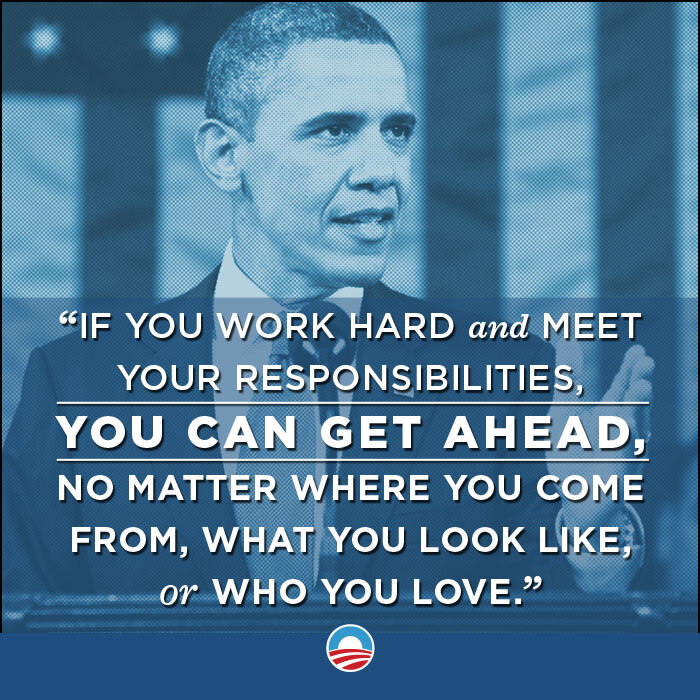
"As Americans, we all share the same proud title: we are citizens."
- Obama, State of the Union 2013
I've been thinking a lot about what it means to "be a good citizen".
Particularly when I get really busy, I think I tend to be less of a "good citizen", but it's something I believe very strongly in (thank you parents, grandparents, friends!) and always feel better when I'm more engaged in my citizenship.
What does being a good citizen mean to you?
I'm still brainstorming, but what it means to me is:
(1) be kind.
it's simple but the most important thing
to take care of each other
(2) be curious.
learn about the issues that affect you,
from many (not just both) sides
(3) be the democracy.
do something about it.
write. lobby. discuss. vote.
This week's horrifying news of children dying in CT has definitely left me and those I love more shaken than I thought. The two thoughts that came to me first were: (1) this shows how little we can predict about what will happen, no matter how safe we make sure we and the people we love are, and (2) this emphasizes how much we need to take care of each other on every level, whether that's getting to know your neighbors, to be there fore your family and friends, or to fund mental health services and outreach programs to help people who need even more help.
The best response I have heard was on NPR who quoted the wonderful Fred Rogers on how to cope with the fear and sadness happening around you:
"When I was a boy and I would see scary things in the news, my mother would say to me, "Look for the helpers.
You will always find people who are helping."
To this day, especially in times of "disaster," I remember my mother's words and I am always comforted by realizing that there are still so many helpers – so many caring people in this world."
I definitely look for the helpers - and more and more strive to be one myself.
*according to this new study, this woman is very wrong.
One of the hypotheticals that is always touched on in reproductive rights discussions is what would happen if we simply did not allow women to have abortions? Well, the Turnaway study from San Francisco-based research group Advancing New Standards in Reproductive Health (ANSIRH), investigated that question and just presented their first results.
In brief, the group followed over 1000 women across the country who went to have abortions. Most were able to obtain abortions (97% had no regret), but almost 200 women were not able to have abortions, usually because they were farther along in their pregnancies than the places they went to have abortions would perform the procedure. The researchers interviewed these women extensively and compared them with the group who was able to obtain abortions.
A few (of the many) things worth mentioning:
1. women not able to have abortions were more likely to be financially struggling a year later.
Compared to the group who did have abortions, a year later (the study is ongoing) those who were "turned away" were more likely to be on government assistance, living beneath the poverty line, and less likely to be working full time.
2. women not able to have abortions were more stressed.
They also reported more stress and were equally as likely to be depressed as the other group of women (as in, no happier).
3. women not able to have abortions had more medical problems.
Including pregnancy complications and postpartum complications (abortion is almost always safer than pregnancy, as is birth control).
4. women not able to have abortions were more likely to be victims of domestic abuse.
The researchers attribute this not to the "turn-aways" being more likely to enter into abusive relationships, but being less able to get out of them while pregnant/with a new baby. But this didn't mean that men were more likely to stick around - they found that "men were no more likely to live with a turnaway who'd borne their children than they were to live with a woman who had an abortion".
This study is excellent data to add to the discussion of women's reproductive rights - showing that the consequences of our reproductive choices are far-reaching and longer lasting than just 9 months.
~~~~
"As women's access to abortion care...becomes increasingly restricted, it is extremely important to document the effect of unintended pregnancy on women and their families. The Turnaway Study is an effort to capture women's stories, understand the role of abortion in women's lives, and contribute to the ongoing public policy debate on the mental health and life course consequences of abortion and unwanted childbearing for women."
According to the Environmental Working Group (a stellar group always on the cusp of nutrition and health) via my even more awesome and up to date on nutrition and health sister), testing revealed pesticide content in lots of fruits and veggies. Here are the results (reflecting pesticide and bacteria content) and recommendations about what is worth buying organic:
"It comes down to this: if the issue is contraception, Republicans lose. The polls are clear enough about that. But the numbers do move a bit depending on how you ask the question: if it’s framed in part as an issue of religious liberty, the picture looks better for opponents of the rule. There, Republicans have an opening—if they can shift the debate away from contraception, and instead make it about the President attacking religion and the religious (and throw in a few winking hints about his personal beliefs), then they have a chance to turn this into a winning issue come November."
Oh goodness, I hope note. Read more of this New Yorker article here.
After many months of treating really sick people and watching them take drugs with life altering side effects, undergo procedures with lost of risks, be connected to tubes and pumps and monitors to stay alive, and return to the hospital still not feeling very good, I truly believe we have to focus more on preventing people from getting to the point where it's clear they forget what "healthy" feels like.
We learn about all the amazing ways we can fix arteries that are clogged, lungs that aren't opening, knees that aren't able to hold body weight, hearts that are too big to pump well, livers that are too clogged with fat to detoxify our blood, blood pressure that is so high it is shearing off the insides of blood vessels, and kidneys that are too full of sugar to filter well, and I think:
and people wonder why our health are costs are skyrocketing? Why you see a gazillion doctors when you're in the hospital? Why our health system is going broke?
It's because we aren't protecting health enough. Maybe it's because the consequences sometimes take years to show up, or maybe it's that our society doesn't promote healthy behavior nearly enough by what's cheap, what's available, how much time we have, but those all pale in comparison to what you do now determines whether or not you are ALIVE in twenty, thirty years, much less whether you are connected to a tube or can keep your leg, or need a kidney transplant.
Especially because so much could be prevented with just creating a slightly more health lifestyle!
(medical school really has just filled in the details)
1. don't smoke...anything...ever.
2. eat mostly greens and fiberous grains, avoid too much meat and processed food
3. walk (or just move!) as much as possible but at least 30 minutes every day
4. stay connected to a community - any community in any way.
5. get enough sleep (whatever amount like enough to you and is marginally feasible)
check out this awesome video a friend shared with me about the one thing that makes the biggest difference in your health:
in summary, the positive effects of this wonder medicine:
Knee Arthritis: reduces rates of pain and disability by 47%
Dementia and Alzheimers: reduces progression by 50%
Diabetes: reduces progression by 58%
Hip Fractures: reduces risk of fracture by 41% in postmenopausal women
Anxiety: reduces by 48%
Depression: 30% relieved with low dose, even up to 47% with higher dose
inspiration enough to get off your computer and go for a run, or even just go pace around the house as you talk on the phone to your sister for half an hour? yeah, me too.
By the Kaiser Family Foundation, finally an easier explanation of health care reform. Except it still seems confusing. Sigh - at least it's a start. Though I don't know what this is about stopping the huge increase in medicaid/medicare funding to hospitals and doctors - maybe the total amount paid to doctors and hospitals from these programs has increased, but the reimbursement rate has significantly DECREASED per person, and every year congress stalls when trying to decide if they're even going to continue reimbursement. What a crazy system I've gotten myself into.
http://healthreform.kff.org/the-animation.aspx Health care reform explained in "Health Reform Hits Main Street." Confused about how the new health care reform law really works? This short, animated movie -- featuring the "YouToons" -- explains the problems with the current health care system, the changes that are happening now, and the big changes coming in 2014. Written and produced by the Kaiser Family Foundation. Narrated by Cokie Roberts, a news commentator for ABC News and NPR and a member of Kaiser's Board of Trustees. Creative production and animation by Free Range Studios